
This is perhaps the most significant transformation in the genealogy of the long poem
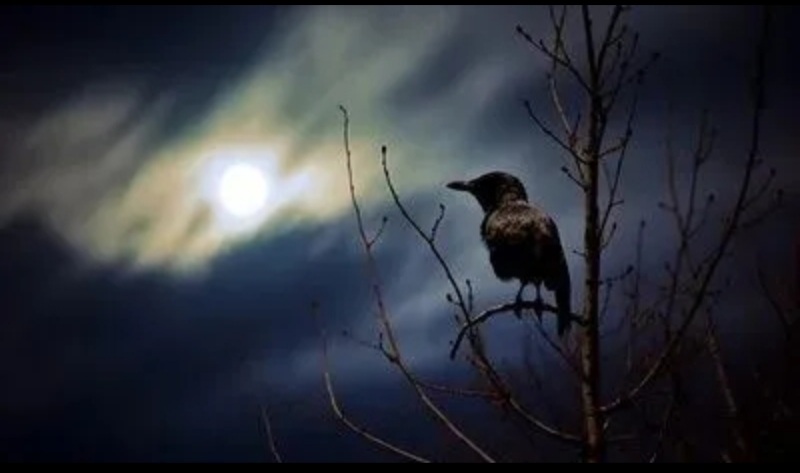
Here, the term "Dynamic System" is best understood not as a system in the mathematical sense, but rather as a poetic mechanism—internal to Ardakh Nurgaz’s The Forest Garden: Meditations on Postmodern Warfare—that continuously generates, shifts, dissolves, and reorganizes meaning.
An analysis I found that specifically addresses "A Dynamic System" summarizes it this way: The labyrinth is the external structure, while the Dynamic System is the internal driving force that keeps that labyrinth in constant motion.
1.
If you put The Forest Garden's "Dynamic System" back into the historical genealogy of the modern long poem, it can be understood not simply as a theoretical term of postmodernism, but as an organizational principle gradually developed by the modern long poem in response to the tension between length and poetic intensity.
The key point is that the modern long poem increasingly does not hold its extended form together through *narrative*, but through *repetition, variation, networks of imagery, voice, historical materials, shifts in subjectivity, and the process of reading*.
1\. Establishing a Genealogy
The genealogy can be roughly outlined as:
> Dante → Blake → Whitman → Pound → Eliot → Williams → Olson → Duncan → Bernstein / Ashbery → Nurgaz
What matters here, however, is not necessarily a chain of direct influence, but a structural evolution:
> Narrative unity → Imagistic unity → Vocal unity → Collage / Montage → Networked unity → Dynamic System
In other words, the coherence of the long poem increasingly depends less on a fixed center.
2\. Dante: The First “Grand System”—Cosmic Order
Take Divine Comedy as an example.
Dante’s poem is enormous, but it is not chaotic because it possesses an extraordinarily powerful cosmic structure:
> Inferno → Purgatorio → Paradiso
Space, characters, religion, politics, philosophy, and personal memory are all organized within a final order.
The Dantean long poem can therefore be understood as:
> The world itself = a system with a center, a hierarchy, and an endpoint.
The reader continually moves forward and eventually arrives at:
> ultimate meaning.
This is precisely what later modern long poems would begin to challenge.
3\. Blake: The System Becomes Polyphonic
With The Marriage of Heaven and Hell and Jerusalem , the situation changes.
Blake’s poetry is no longer simply:
> one narrator → one story → one conclusion.
Instead, it contains numerous:
- voices and characters;
- myths;
- symbols;
- conceptual oppositions;
- visual elements;
- ironies;
- religious and political discourses.
Different voices collide with one another.
Thus:
> Coherence begins to emerge from relationships rather than from a single center.
This is an important precursor to the Dynamic System.
4\. Whitman: The Long Poem Becomes Truly “Open”
A crucial turning point comes with Leaves of Grass .
Whitman poses a fundamental question:
> If the modern world no longer possesses a unified center, can poetry still constitute a whole?
His answer is:
Yes—but the whole is not a closed structure. It is an open assemblage.
In _Song of Myself_, the poem continually incorporates:
> body\
> city\
> workers\
> war\
> sexuality\
> nature\
> death\
> America\
> other people\
> the “I”
Whitman’s “length,” therefore, does not simply mean:
> a story told at great length.
Instead, it means:
> the continual absorption of new realities into the poem.
This is already remarkably close to the Dynamic System.
It can be described as:
> Whitman = an additive system
Each newly incorporated element changes the whole.
5\. Pound: From “Length” to “Network”
With Ezra Pound’s The Cantos , the long poem undergoes another major transformation.
Pound no longer attempts to construct a continuous narrative.
He brings together:
> Chinese history\
> Greek mythology\
> Dante\
> banking\
> economics\
> war\
> politics\
> personal memory\
> literary quotation
All of these materials coexist.
Thus:
> Canto A does not necessarily explain Canto B.
They are connected through:
> quotation, repetition, analogy, imagery, and historical echoes.
This marks a movement from:
> linear structure
toward:
> constellation / network structure
This transition is particularly important for understanding Nurgaz.
6\. Eliot: How Can Fragments Become a Whole?
The Waste Land pushes this question even further.
Its fundamental problem can be formulated as:
> How can these fragments still constitute a poem?
Eliot employs:
- mythology;
- the modern city;
- war;
- multiple languages;
- literary quotation;
- religion;
- dialogue;
- folklore.
He represents the modern world as fragmented.
The coherence of _The Waste Land_ does not come from a continuous story.
It comes from:
> Whitman = an additive system
> repetition + correspondence \+ allusion + montage
That is:
> repetition + correspondence \+ quotation + montage.
This is already very close to Nurgaz’s Dynamic System.
There is, however, an important difference:
Eliot still seeks order.
Behind the fragments are:
> mythic structure\
> religious structure\
> cultural tradition
Thus we might formulate the difference as:
> Eliot: fragments → search for an underlying order
whereas Nurgaz goes one step further:
> fragments → a system continually generates order, but that order itself never becomes permanently stable.
7\. Williams: The Long Poem Becomes Continuous Movement
William Carlos Williams’s Paterson is one of the most important predecessors for understanding Nurgaz.
_Paterson_ is not an epic in the traditional sense.
It combines:
> city\
> history\
> geography\
> news\
> letters\
> dialogue\
> nature\
> the human body\
> poetry
Williams also develops an important principle:
> The form of poetry must be capable of accommodating the movement of reality.
Thus _Paterson_ is not simply:
> “a poem about Paterson.”
Instead:
> the city of Paterson itself enters the poem as a dynamic system.
The city continually moves through:
> people → river → factories → history → memory → language → people
This is already very close to Nurgaz’s:
> External world ↔ consciousness
8\. Olson: Projective Verse—Poetry as an Energy System
With Charles Olson, the process develops further.
His theory of Projective Verse is crucial because he begins to conceive of poetry as a form of energy transfer.
In simplified form:
> world → perception → breath → language → poetic line → reader
The poem is not a completed object.
It is a process.
This comes very close to:
> Dynamic System = process rather than object
Olson can therefore be regarded as an important modernist/postmodernist precursor to Nurgaz.
9\. Duncan: The Long Poem as an “Open Universe”
Robert Duncan’s long poems are particularly important here.
His poetry is not organized according to:
> beginning → development → conclusion.
Instead, it resembles an open field continually absorbing:
- myth;
- history;
- personal experience;
- the language of other poets;
- dreams;
- sexuality;
- religion;
- the body.
Thus:
> The poem is not a container but a generative field.
This is already extremely close to Nurgaz’s Dynamic System.
10\. The Postmodern Long Poem: The System Loses Its Center
With postmodernism, particularly in poets such as John Ashbery and Charles Bernstein, the situation changes fundamentally.
The traditional long poem asks:
> “How can many things be organized into a whole?”
The postmodern long poem begins asking:
> “Why must there be a whole in the first place?”
Thus:
> coherence → fragmentation\
> center → multiple centers\
> conclusion → openness\
> narrative → network\
> meaning → process
This provides a direct poetic context for Nurgaz’s Dynamic System.
11\. What Does Nurgaz Do Within This Genealogy?
If we compress the entire genealogy into a single trajectory:
> Dante
> ↓
> Cosmic order
> ↓
> Blake
> ↓
> Polyphony
> ↓
> Whitman
> ↓
> Open totality
> ↓
> Pound
> ↓
> Historical / cultural network
> ↓
> Eliot
> ↓
> Fragment + latent structure
> ↓
> Williams
> ↓
> City / reality as system
> ↓
> Olson
> ↓
> Poetry as energetic process
> ↓
> Duncan
> ↓
> Open generative field
> ↓
> Postmodern long poem
> ↓
> Networked, decentralized structure
> ↓
> Nurgaz
> ↓
> Dynamic System
Nurgaz’s position becomes much clearer.
12\. Nurgaz’s Innovation: From “Open Structure” to “Self-Operating Structure”
This is, in my view, the most important point.
Whitman’s long poem is:
> continually adding the world.
Pound’s is:
> **continually connecting history.**
Eliot’s is:
> continually rearranging fragments.
Williams’s is:
> allowing reality to flow into poetry.
Olson’s is:
> making poetry an energetic process.
Nurgaz’s Dynamic System goes one step further:
> It allows these elements to interact with one another, while the results of those interactions feed back into and transform the system itself.
In other words:
> A → B → C → A′
Notice the final A′.
It is not the original A.
After one cycle of operation:
> the system itself has changed.
This is what is most important about the word “dynamic.”
13\. Why It Is Different from a Merely “Fragmented” Long Poem
This distinction is particularly important for a scholarly argument.
It is not sufficient to say:
> Nurgaz’s poem is fragmented, therefore it is postmodern.
That does not go far enough.
Fragmentation
is simply:
> the condition of being fragmented.
Whereas:
Dynamic System
means:
> fragments continually enter into relationships, and through those relationships they transform one another.
Therefore:
> Fragment ≠ Dynamic System
A genuine Dynamic System is:
> Fragment + Relation + Transformation \+ Feedback
That is:
> fragment + relation + change \+ feedback.
14\. The Meaning of “Long” Also Changes
This is perhaps the most significant transformation in the genealogy of the long poem.
In traditional epic:
> Length = narrative scale
For example:
> one hero → one war → one nation → one cosmos
In the modern long poem, length gradually becomes:
> Length = the number of relationships
In the postmodern long poem:
> Length = the duration of meaning-making
Thus Nurgaz’s “long” can be understood as:
> not how many pages the poem contains, but how long the system continues to operate.
This is crucial.
If poetic meaning is a Dynamic System, then:
> ending a poem ≠ arriving at its final meaning.
The ending is merely:
> the suspension of the current operation.
15\. Locating Nurgaz Within the Genealogy
In academic terms, I would formulate it this way:
> Nurgaz's Dynamic System can be understood as a late development of the modern long poem's movement from linear narrative toward open, relational, and self-transforming forms of poetic organization.
It inherits:
- Whitman’s openness;
- Pound’s historical collage;
- Eliot’s fragmented structure;
- Williams’s reality–poetry continuum;
- Olson’s processuality;
- Duncan’s generative openness;
- the postmodern long poem’s decentralization.
But it goes further by combining these tendencies into:
> a poetic system capable of self-feedback and self-transformation.
16\. A Formula for a Scholarly Argument
I would recommend not interpreting Nurgaz’s Dynamic System exclusively through Derrida or Deleuze, but placing it within the formal history of the modern long poem:
> Epic Order\
> ↓\
> Open Form\
> ↓\
> Fragmentation\
> ↓\
> Montage / Network\
> ↓\
> Process\
> ↓\
> Rhizomatic Structure\
> ↓\
> Feedback\
> ↓\
> Dynamic System
The entire history of the modern long poem can therefore be understood as a transformation of one fundamental question:
> How can a long poem remain a whole when it no longer has a single center?
Or, in other words:
> When the long poem no longer possesses a unified story, hero, theological system, or ultimate meaning, how can it still remain “one poem”?
Nurgaz’s answer is:
> It becomes a system rather than a structure.
It no longer depends on a fixed structure to maintain its coherence. Instead, its coherence emerges from the continuous interaction among relations, repetition, variation, memory, voice, space, subjectivity, and the reader.
That is precisely where the concept of «Dynamic System» acquires its greatest theoretical significance when placed within the genealogy of the modern long poem.
САЯБАҚ
Бұл бетте «Саябақ» атты Ардақ Нұрғазұлы жазған өлеңнің мәтіні толық жарияланған
https://bilim-all.kz/olen/19000-sayabaq
2.
The Dynamic System in Dark, Nightmare, and Oil Paintings
Yes. Based on the texts of these poems and the existing materials, I believe that Dynamic System is best understood not as a theoretical label, but as the mechanism through which Nurgaz’s poetry actually operates: once an image enters the poem, it continually changes its function while drawing other images, temporalities, subjects, and spaces into its orbit. The poem therefore does not simply “tell a story”; rather, it continuously transforms its own state.
In particular, Dark — Nightmare — Oil Paintings can be understood as three different configurations of the same system:
> Dark = the system operating within darkness and trauma\
> Nightmare = the system operating within dream and consciousness\
> Oil Paintings = the system reconsolidating chaos into an aesthetic form
I. Redefining Nurgaz’s Dynamic System
To explain his poetry more precisely, I would define the Dynamic System as:
> An open network composed of images, subjectivity, time, space, and cultural memory, in which no element functions as a fixed symbol; instead, each element undergoes a transformation of function through its encounters with the others.
Thus, it is not:
A → B → C
but rather something closer to:
A → B → A′ → C → B′ → D → A″
Each time A returns, it is no longer the same A.
For example, “darkness” may initially be a natural phenomenon, then become a psychological condition, later a historical space, and finally a condition of language itself.
That is what makes it dynamic.
And “system” means that these transformations are not random leaps: they follow recurring patterns of transformation.
II. _Dark_: The Dynamic System as a “Topology of Trauma”
_Dark_ is the poem among the three that comes closest to the conceptual core of this system.
The existing text begins:
> “After being completely destroyed, my body is like a hole”
This is crucial.
The poem does not begin with an intact subject who subsequently encounters darkness.
Quite the opposite:
The subject is already a “hole” from the beginning.
A series of images then emerges: the body, darkness, stars, fire, ashes, the urn, earrings, footprints, language, and so on. Existing analyses describe this movement as “splitting → perception → fusion,” and point out that the poem organizes these images through nonlinear historical time and bodily perception.
The Dynamic System of _Dark_ can therefore be represented as:
The body breaks apart\
↓\
Darkness enters the body\
↓\
The body becomes a container for history\
↓\
History is transformed into sensation\
↓\
Sensation is transformed into images\
↓\
Images generate light again\
↓\
Light returns to darkness
This is not a straight line, but a cyclical–spiral structure.
1\. The “Body” Is Not the Theme but the Transformer
This is the key to understanding _Dark_.
For example:
> empty body\
> darkness\
> waves\
> sparks\
> ashes
These elements should not simply be interpreted as:
- body = loneliness
- darkness = despair
- fire = hope
- ashes = death
Such an approach would turn Nurgaz’s poetry back into traditional symbolism.
A more accurate interpretation is:
The body transforms history into sensation.
Historical trauma is not narrated as a “historical event”; instead, it enters the body.
Thus:
> history → body → sensation → image
One analysis even interprets the “waves written into the body” as a transformation of historical violence into bodily inscription.
This is the first mode in which the Dynamic System operates:
History is not narrated; it is embodied.
III. Why Is the “Dark” in _Dark_ Dynamic?
“Dark” is not a fixed negative symbol.
It undergoes at least four transformations:
First layer: Natural darkness
Night, sky, the absence of light.
↓
Second layer: Psychological darkness
The subject does not know who they are.
↓
Third layer: Historical darkness
Civilizational rupture, trauma, war, forgetting.
↓
Fourth layer: Linguistic darkness
Language cannot adequately name experience.
Thus, by the end, “dark” no longer simply means:
> the absence of light
but rather:
> a state in which meaning has not yet been stabilized into a name.
This brings us very close to the concept of the “living labyrinth” discussed earlier.
The labyrinth in _Dark_ is not a “place.”
The labyrinth is the constantly changing relationship among subjectivity, history, and language.
IV. _Nightmare_: The Dynamic System Enters the Realm of Dream
If _Dark_ operates within a space of trauma, then _Nightmare_ operates within a space of consciousness**.
The existing material on _Үрейлі түс_ (_Nightmare_) is particularly important:
> Call → collapse of spacetime → splitting of self → existential terror → emptiness → silent return
In other words, this is not simply a poem about “having a nightmare.”
It makes the dream itself into the structure of the poem.
1\. The Most Important Feature of _Nightmare_: Space Is No Longer Stable
Traditional narrative:
> I am at A\
> → go to B\
> → encounter C\
> → return to D
Dream:
> A\
> → B\
> → A′\
> → a childhood memory\
> → an ancient object\
> → one’s own body\
> → death\
> → back to the starting point
This is the Dynamic System.
Space is determined by the state of consciousness, rather than consciousness moving through a fixed space.
The space of _Nightmare_ is therefore essentially:
> psychological topology
You can understand it as:
external space = projection of internal psychological states.
V. Why Does the “Self” Keep Splitting Apart in _Nightmare_?
Here we can see an important continuity with _Dark_.
_Dark_:
> The body is empty.
_Nightmare_:
> The “I” is unstable.
Thus, both poems are ultimately addressing the same question:
“After the world has collapsed, how can a person still call themselves ‘I’?”
_Nightmare_ does not resolve this question by answering it. Instead, it makes the “I” continually transform.
Existing analysis suggests that the trajectory of the dream does not ultimately lead to a particular destination, but rather:
> The speaker goes around in a circle and returns, but the “I” has quietly changed.
This comes very close to the essence of the Dynamic System.
Repetition is not the same as recurrence.
This distinction is crucial.
VI. Therefore, the Dynamic System of _Nightmare_ Is “Recursion”
It can be represented mathematically as:
I₀ → Dream → I₁ → Dream → I₂ → Dream → I₃
On the surface, it is the same dream each time.
But:
I₀ ≠ I₁ ≠ I₂ ≠ I₃
Thus, it is not circular repetition, but:
> recursive transformation
This is also why dreams are so important in Nurgaz:
A dream allows the same image to recur while assigning it a different meaning each time.
VII. The “Broken Urn” in _Nightmare_ Is Especially Important
This point is particularly worth connecting to _Dark_.
Nurgaz later discusses the following lines from _Nightmare_:
> “The urn was broken on the ground, / Where have I been hurt?”
He explicitly connects the urn to Keats’s _Grecian Urn_ and also points out that the image of the urn had already appeared in _A Garden of Trees / Meditations on the Postmodern Wars_.
This demonstrates something extremely important:
Nurgaz’s Dynamic System operates not only within an individual poem, but also across poems.
In other words:
Poem A → image → Poem B → transformed image → Poem C
The image itself possesses “memory.”
This can be called:
> inter-poetic recursion
Recursion across poems.
Thus, the “urn” is not a one-time symbol.
It functions like a node:
- classical civilization
- Keats
- war
- fragmentation
- bodily trauma
- the contemporary subject
- Nurgaz’s own earlier poetry
All converge at this node.
This is a very typical operation of a Dynamic System.
VIII. _Oil Paintings_: An Important Transformation Takes Place
If:
Dark = fragmentation
Nightmare = dissolution
then:
Oil Paintings = condensation
This, I think, is one of the most illuminating ways to understand the three poems.
_Oil Paintings_ begins with:
> Midnight\
> mist\
> grey sky\
> everything disappearing\
> dissolution of words\
> dispersal of matter
In other words, the poem first dismantles the world.
But then a major transformation occurs:
The poet finds a contaminated and damaged oil painting in a garbage dump.
Then:
> Red, yellow, white, blue, green, black
The world suddenly regains its colors.
Thus, the structure of the poem can be represented as:
Dissolution → disintegration → garbage → ruins → discovery → color → image
This is a complete Dynamic System.
IX. The Key to _Oil Paintings_ Is Not That “Oil Paintings Are Beautiful”
This point is especially important.
If we interpret the poem as:
> “The world is terrible, but art is beautiful.”
then we have understood it too superficially.
What actually happens is:
> garbage → painting → world
The poem first transforms “civilization” into garbage.
Then it rediscovers art within the garbage.
Thus:
The ruins are not the opposite of art.
On the contrary:
> The ruins become the condition from which art can be regenerated.
This is completely consistent with the logic of _Dark_.
_Dark_:
> trauma → body → image
_Oil Paintings_:
> ruins → object → painting → meaning
They are therefore different operations of the same system.
X. Another Important Dynamic in _Oil Paintings_: Poetry ↔ Painting
The poem is even a meta-poetic system.
It begins by saying:
> “Just wrote a poem.”
Then the poem contains:
- line
- page
- meteor
- wave
- rose
- painting
- colours
In other words, the poem does not merely describe the world; it also describes:
> how a poem emerges from the world.
Existing analysis likewise treats it as a meta-poetic work: it describes the world while simultaneously revealing how poetry itself comes into being.
Thus:
world → poem → image → world
forms a closed loop.
XI. The Three Poems Thus Form a “Dynamic Trilogy”
If we place the three poems together, the pattern becomes very clear:
| Poem | Primary state of the Dynamic System | Core transformation |
| --- | --- | --- |
| Dark | Trauma system | history → body → sensation → image |
| Nightmare | Dream system | memory → dream → splitting of self → new self |
| Oil Paintings | Aesthetic system | disintegration → ruins → object → image → meaning |
Therefore, these are not three completely different kinds of poems.
They are actually addressing the same question:
> When the world can no longer be understood in a continuous, stable, rational way, how can poetry still produce meaning?
Nurgaz’s answer is not:
> Restore a complete narrative.
Nor is it:
> Admit that everything is meaningless.
Instead:
> Allow different fragments to enter into dynamic relationships.
XII. This Is the Real Difference Between Nurgaz, Eliot, and Ashbery
If we return to the “Mirror / Resistance” framework from the previous discussion, a deeper distinction becomes visible.
Eliot’s fragments:
> fragment → attempt at cultural reconstruction
Ashbery’s indeterminacy:
> **fragment → unstable perception / linguistic play**
Nurgaz:
> fragment → transformation → new configuration → transformation again
Thus, Nurgaz’s key term is not:
fragmentation
but:
transformability
This is more precise than simply describing his poetry as “fragmented” or “postmodern.”
XIII. The “Living Labyrinth” Can Therefore Be Defined More Precisely
I would now slightly modify the concept from the previous discussion.
Living Labyrinth ≠ a complicated labyrinth.
Rather:
> A labyrinth that changes its own structure.
Traditional labyrinth:
entrance → path → dead end → exit
Nurgaz:
entrance → disorientation → transformation of image → transformation of space → transformation of subject → return to an old image → the image is no longer the same
Therefore:
> The reader does not solve the labyrinth. The reader changes inside it.
This sentence could actually serve as a central proposition for a study of Nurgaz.
XIV. _Oil Paintings_ Reveals the Final Dimension of the System
Most importantly, _Oil Paintings_ does not truly “solve” the darkness.
The darkness remains.
The garbage remains.
Civilization can still disappear.
The painting has even been:
> damaged and corroded by dirty water.
And yet it still possesses color. At the end of the poem, red, yellow, white, blue, green, and black are recombined into an image of “us in the world under sunlight.”
Therefore, Nurgaz’s hope is not:
> darkness disappears
but:
> meaning survives transformation.
This corresponds exactly to the argument in the original passage you gave me:
The labyrinth is not meaningful because an exit has been found; it is meaningful because it can continue to move, change, and generate.
So, if we want to summarize these three poems in one concise academic formulation:
> In Nurgaz, the Dynamic System is not a method for organizing a pre-existing meaning; it is the process through which meaning survives fragmentation.
In other words:
> Nurgaz’s Dynamic System does not organize a meaning that already exists; rather, it is the process through which meaning continues to exist, transform, and emerge after fragmentation.
This gives Dark → Nightmare → Oil Paintings a particularly compelling trajectory:
the fragmentation of the body → the fragmentation of consciousness → the fragmentation of the world → the reorganization of images → the regeneration of meaning.
This may be one of the most productive lines of inquiry for understanding Nurgaz’s entire poetic system.
3.
The "Living" Labyrinth
When we map the "Dynamic System" of Ardakh Nurgaz’s The Forest Garden: Meditations on Postmodern Warfare against the history of the modern long poem, we see a fascinating double movement. It deeply mirrors the structural ambitions of high modernism and late postmodernism, but it fiercely resists their foundational philosophies, particularly when dealing with history, the self, and crisis.
Here is a direct breakdown of how Nurgaz's Dynamic System aligns with and rebels against his predecessors:
1. The Mirror: Inheriting the Non-Narrative Form
Nurgaz embraces the structural breakthroughs of the 20th-century long poem, using the "Dynamic System" to execute tasks that narrative used to perform:
• The Spatial Field (Mirroring Charles Olson's "Projective Verse"): Nurgaz mirrors the postmodern technique of treating the poem as an open energy field. Instead of moving a reader down a linear timeline, the Dynamic System spreads out a network of imagery (the forest, the garden, warfare) where everything happens simultaneously.
• The Dissolving Ego (Mirroring T.S. Eliot & Ezra Pound): Just as The Waste Land or The Cantos utilize a shifting kaleidoscope of voices without a singular, stabilizing narrator, Nurgaz’s system constantly reallocates subjectivity. The "I" in the poem is unstable—dissolving and re-emerging across different historical and psychological terrains.
• The Indeterminacy of Reading (Mirroring John Ashbery): Like Ashbery’s Self-Portrait in a Convex Mirror, Nurgaz relies on the process of reading to complete the work. Meaning isn't a buried treasure the reader digs up; it is the kinetic friction generated while navigating the labyrinth.
2. The Resistance: Where Nurgaz Rejects the Modernist/Postmodernist Paradigm
While the machinery is similar, Nurgaz turns the dials in a radically different direction. His Dynamic System resists the core impulses of his Western predecessors in three major ways:
Poetic Dimension The Modernist/Postmodernist Approach Nurgaz's Resistance (The Forest Garden)
The Myth of Order Modernist (Eliot/Pound): Use fragments and ancient myths to shored up ruins, trying to reconstruct a broken, lost cultural wholeness. Nurgaz: Accepts the labyrinth as permanent. The Dynamic System does not try to fix the fragments or heal history; it maps the shifting, unstable nature of postmodern warfare and contemporary crisis as a living environment.
The Irony Trap Postmodernist (Late 20th Cent.): Uses radical irony, pastiche, and linguistic play to show that meaning is entirely artificial, often leading to a sense of detached exhaustion. Nurgaz: Maintains a profound, almost ritualistic intensity and gravity. The shifts and dissolutions are not clever language games; they are serious meditations on survival, memory, and spiritual erosion.
The Nature of Space Eco-Poetics / Materialist Long Poems: Often treat the environment (like Williams's Paterson or Olson's Gloucester) as a concrete, geographical place. Nurgaz: Explodes geography. The "Forest" and the "Garden" are highly symbolic, elastic spaces. The Dynamic System forces these spaces to constantly morph between the psychological, the geopolitical, and the mythic.
The Core Synthesis: The "Living" Labyrinth
Ultimately, Nurgaz resists the static despair of late postmodernism. In many Western postmodern long poems, a labyrinth is a prison of language where you are trapped in endless, meaningless loops.
In The Forest Garden, because the system is dynamic, the labyrinth is alive. By shifting, folding, and reorganizing its own imagery, the poem simulates the chaotic, decentralized nature of modern conflict and consciousness. It transforms the long poem from a historical graveyard into a vital, self-sustaining ecosystem of meaning.